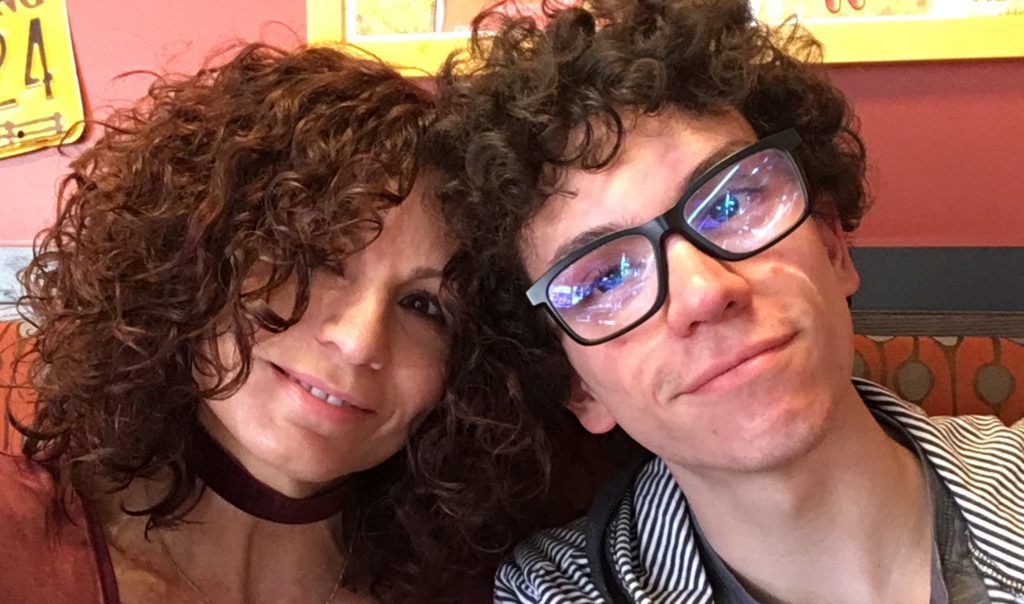

Although my son’s father and I are Latino, at times I feel my son doesn’t fully identify that way. Nathan, born and raised in Colorado and a third-generation Latino may never have the same opportunity to fully grasp the essence of his culture unless he’s exposed to it the way his parents were.
When he was born, it didn’t seem necessary to insist he learn Spanish. Who would he really speak it with? His father and I didn’t speak Spanish at home during our marriage, and we always lived in predominantly Caucasian neighborhoods. We are bilingual because we were raised in New York and Florida, surrounded by Spanish-dominant communities. Spanish was also the primary language in our homes because our parents are first-generation Latinos.
What I did make sure of was that Nathan knew about his ancestry where his grandparents were originally from, how they lived, and how deeply he is loved by both sides of his family. If he ever wants to know more, I’m always here to satisfy his curiosity.
When Nathan was starting school, he was filling out admission forms and asked me which box he should check for race/ethnicity. I told him Latino/Hispanic. With a puzzled look, he asked, “What’s a Latino?”
“You are,” I said. “Your mother and father are Latino.”
He quickly replied, “I thought I was white!”
That made me a little sad, I suppose.
After we talked more about what Latino culture is, he checked the box, still somewhat stunned and confused. Several weeks later, I overheard him telling a friend that he was Cuban–Puerto Rican. I felt a quiet sense of relief. At times, I question our decision to raise him as a “white boy.” I want him to remember he is of Latino descent, while also honoring that he is an American, born and raised.
As he moves further into life, he’ll create his own culture and traditions with his partner, who may or may not be Latina, or of Latino descent. Ultimately, it will be their choice to decide what they identify with most and that, too, is part of the evolving story of who we are.